A Symbol I Kept Noticing in Uzbekistan
At first, I didn’t pay much attention. But over the days, as we moved from one city to another, I kept seeing it. It started to feel intentional, as though it was part of a language. I didn’t yet understand.
Curiosity finally took over, and one day I asked our guide, Khurshid Turgunov, who has a deep understanding of Islamic architecture and the history of the region. He smiled, almost as if this was a question he enjoyed answering.
He told me that the symbol goes back to Zoroastrianism — one of the oldest religions in the world, long before Islam arrived in Central Asia. That moment stayed with me.
Because today, Uzbekistan is largely a Muslim country. And yet, here was a quiet reminder of something much older, still present, still part of the visual and cultural memory of the place. It made me realise how history here doesn’t replace itself — it layers, gently and continuously.
When I asked him what the symbol meant, his answer was simple.
“Good thoughts. Good words. Good deeds.”
There was something striking about how direct it was. No long explanation, no complexity. Just three ideas that felt complete in themselves.
After that conversation, I started seeing the symbol differently. It no longer felt like decoration. It felt like a quiet message, something that had travelled through centuries and still remained part of everyday life, even if not everyone spoke about it openly.
And that is what stayed with me the most.
Key Takeaways
- Repeating geometric and floral motifs in Uzbekistan carry centuries of Silk Road heritage and spiritual meaning.
- Common symbols like pomegranates, stars, and blue tiles represent abundance, divine order, and protection.
- Recognizing these patterns transforms sightseeing into an immersive journey through Central Asian history.
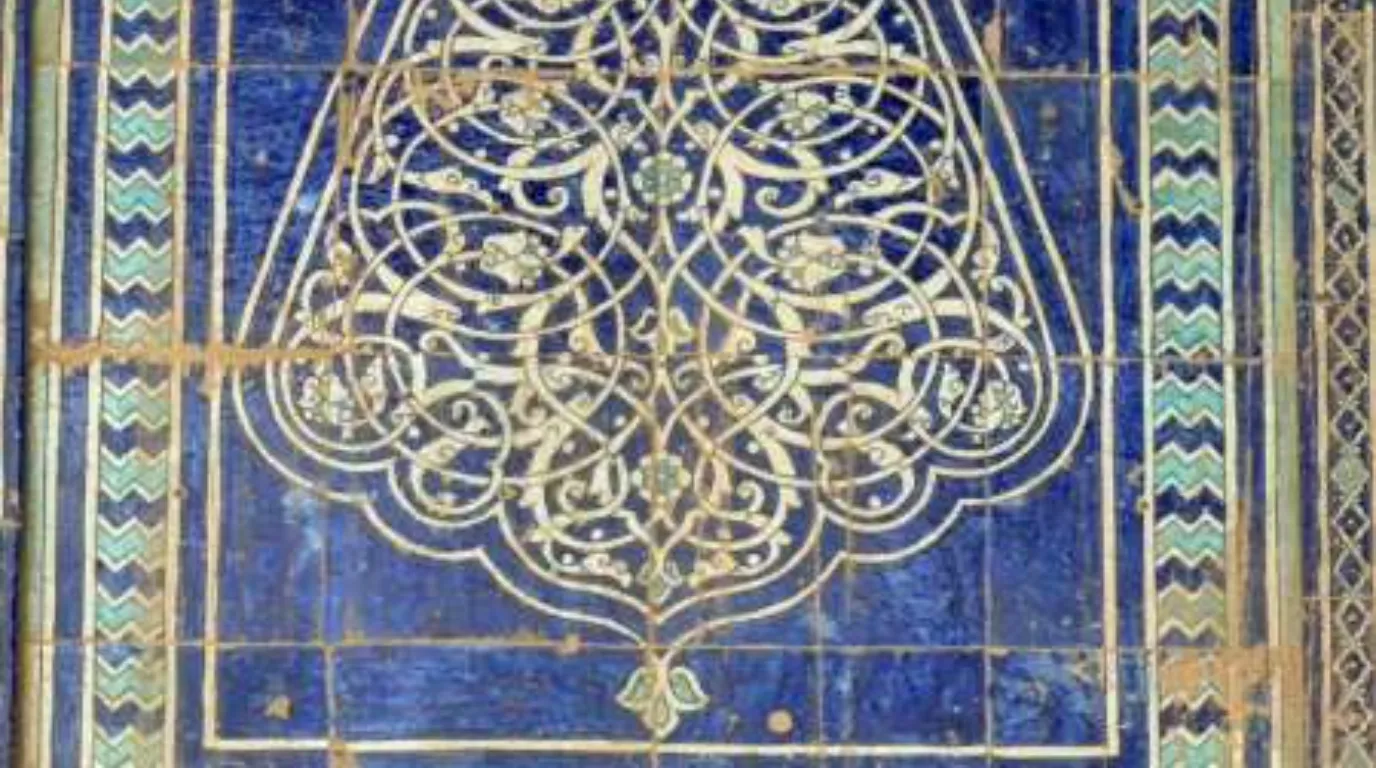
Uncover the hidden meanings behind the repeating architectural and textile symbols scattered across the historic Silk Road cities of Uzbekistan.
Frequently Asked Questions
What is the most common symbol in Uzbek architecture?
Islamic geometric patterns, particularly the eight-pointed star (Rub el Hizb) and intricate mosaic lattices, dominate Uzbek madrasahs and mosques.
What does the pomegranate symbol mean in Uzbek culture?
Pomegranates symbolize fertility, abundance, prosperity, and good fortune, frequently embroidered onto Suzani textiles and painted on ceramics.
Why are geometric patterns so prevalent in Uzbekistan?
Traditional Islamic art avoids figurative depictions of humans or animals, relying instead on geometry, calligraphy, and floral motifs to express divine perfection.
What is a Suzani and what do its symbols represent?
A Suzani is a hand-embroidered textile traditionally created for bride dowries, featuring symbols designed to protect the home, ensure fertility, and bring prosperity.
What does the color blue symbolize in traditional Uzbek tilework?
Turquoise and deep blue mosaic tiles represent the sky, water as a vital desert resource, and spiritual protection against bad spirits.
What does the Humo bird represent in Uzbekistan?
The mythical Humo bird represents happiness, freedom, luck, and spiritual rebirth, serving as a national symbol across Uzbek folklore.
People Also Ask
What is the emblem symbol of Uzbekistan?
The official emblem features the mythical Humo bird with wings spread over a valley under a rising sun, framed by cotton and wheat sheaves.
What is Uzbekistan famous for?
Uzbekistan is famous for its Silk Road history, blue-tiled Islamic architecture, complex decorative motifs, vibrant Suzani textiles, and plov.
What do patterns on Uzbek rugs and textiles mean?
Patterns on Uzbek textiles signify family lineage, fertility wishes, protection against the evil eye, and environmental balance.
Why is cotton a repeating symbol in Uzbek design?
Cotton, historically referred to as 'white gold,' is a foundational agricultural symbol often abstracted in decorative pottery tea sets and carvings.
What is the significance of the Khamsa hand symbol in Central Asia?
The Khamsa or evil eye motif is widely used in Uzbek jewelry and textiles to ward off negative energy and harm.